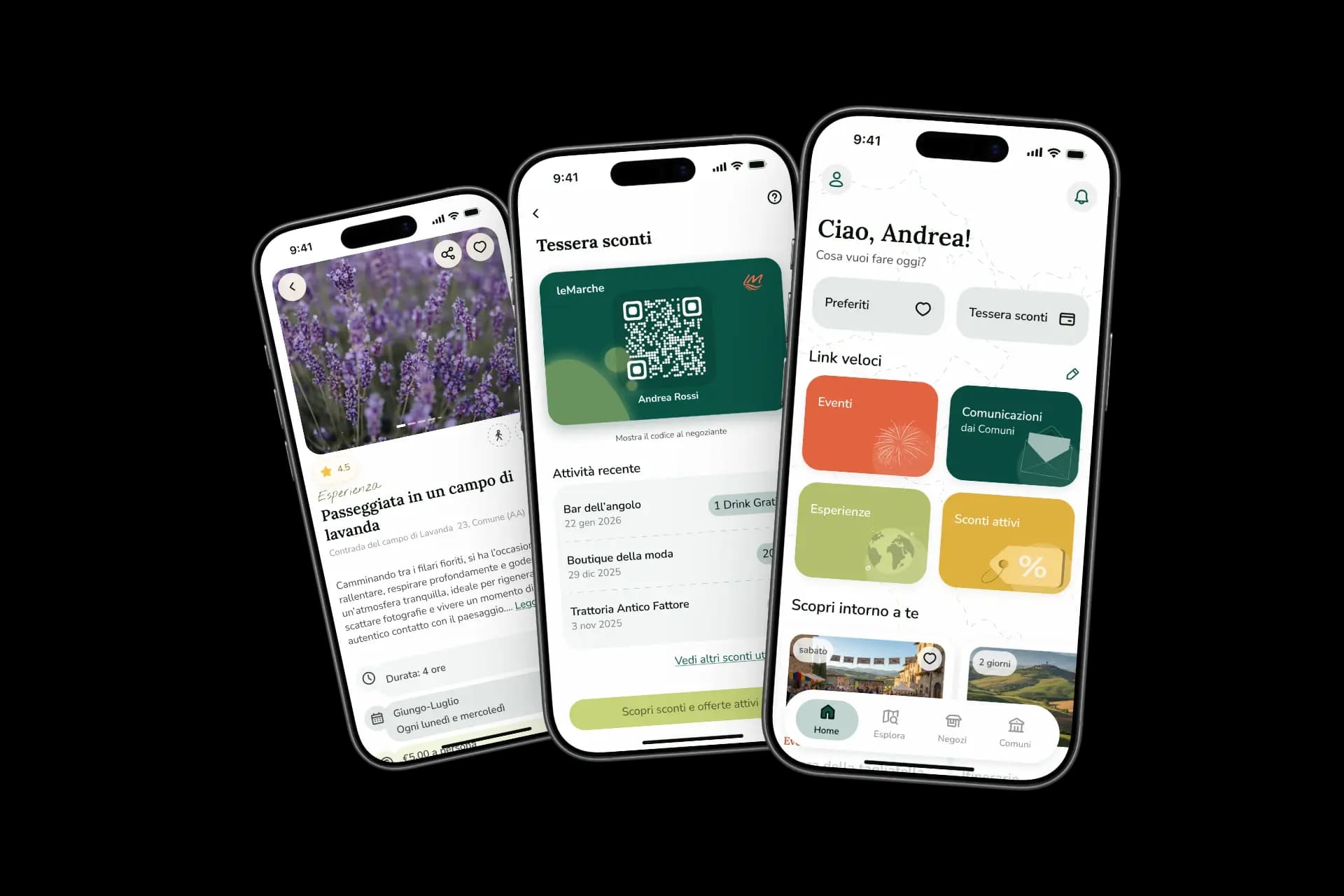
Web for municipalities, operators and the public
LeMarche is a digital ecosystem for the Marche region: events, places, experiences and local businesses in a single network. My contribution is the frontend of three web products that work together — the municipality dashboard, the operator back office and the public website.
Municipality dashboard
The everyday interface for the people who manage the area from the town hall. From here they publish and update events, experiences, itineraries, offers, posts and points of interest, and manage announcements, gamification, calls for proposals and institutional information.
The goal was a clear, practical back office: readable lists, detail views, forms and states, with a rich-text editor where structured content is needed and a consistent desktop experience. Stack: Nuxt 4, Nuxt UI, TypeScript, i18n and Pinia.
Operator dashboard (Appload)
The platform back office for the people who coordinate the ecosystem centrally. It covers municipalities and tags, POIs and categories, events (including import flows), experiences, itineraries, contests, rankings, notifications, users, audiences and analytics.
Here the work is about information density and control: many entities, relationships and repetitive operations, with a UI designed for people who spend a lot of time in the panel. Same Nuxt/Nuxt UI stack, aligned with the municipality dashboard but with a different scope and priorities.
Public website
The public face of LeMarche: product presentation, features, participating municipalities, app downloads, contest sections and interactive maps. Built with Next.js and TypeScript, with IT/EN i18n, UI components and motion to give the marketing sections rhythm without losing clarity in the message.
What ties the three together
A consistent visual language and interaction patterns across back offices and website; web flows to bring content (events, places, offers, announcements) into the ecosystem; attention to responsiveness, baseline accessibility and usability on long tasks in the admin panels. The result is a complete web front: for those who publish, those who run the platform and those who discover LeMarche online.